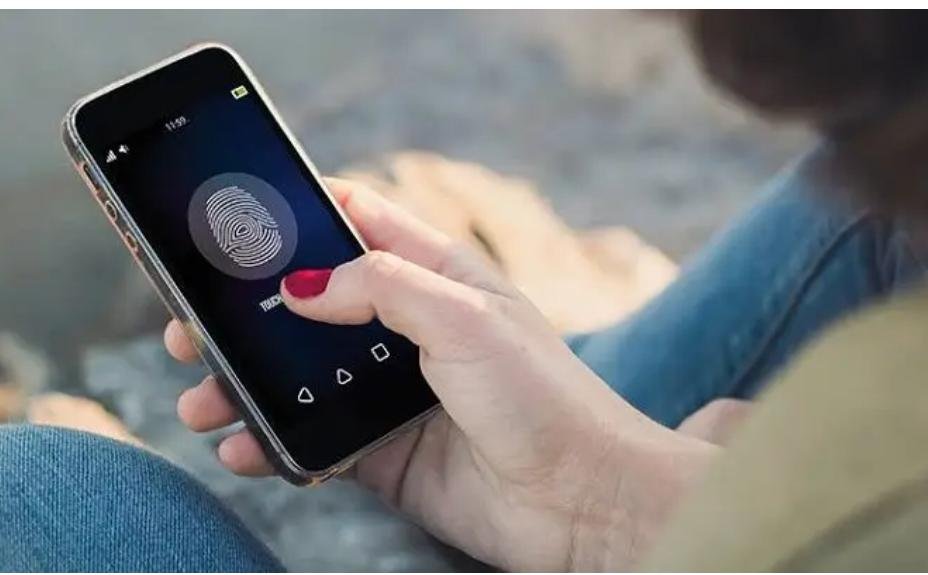
Every person carries a unique signature from birth right at the tips of their fingers. Fingerprints have fascinated scientists, law enforcement agencies, and technology companies for decades because no two individuals share the exact same fingerprint pattern. From unlocking smartphones to solving criminal investigations, fingerprints play a crucial role in modern life.
In this guide, you’ll discover what fingerprints are, how they form, their types, uses, benefits, and why fingerprint technology continues to be one of the most trusted identification methods worldwide.
What Is a Fingerprint?
A fingerprint is the pattern of ridges and valleys found on the surface of a person’s fingertips. These patterns are formed before birth and remain largely unchanged throughout a person’s lifetime.
The uniqueness of fingerprints comes from the intricate arrangement of these ridges. Even identical twins, who share the same DNA, have different fingerprints.
Why Are Fingerprints Unique?
Scientists believe fingerprints develop due to a combination of genetic and environmental factors during fetal development. Small differences in pressure, movement, and growth inside the womb create unique ridge patterns for every individual.
This uniqueness makes fingerprints an excellent tool for personal identification.
Types of Fingerprint Patterns
Although every fingerprint is unique, most patterns fall into three main categories.
1. Loop
The loop pattern is the most common fingerprint type. The ridges enter from one side, curve around, and exit from the same side.
Characteristics:
- Most common pattern worldwide
- Easy to identify
- Found in approximately 60–70% of people
2. Whorl
Whorl fingerprints form circular or spiral patterns.
Characteristics:
- Circular design
- More complex than loops
- Found in about 25–35% of individuals
3. Arch
Arch patterns have ridges that rise in the center and flow from one side to the other.
Characteristics:
- Least common fingerprint type
- Simple appearance
- Found in around 5% of the population
How Fingerprints Are Used
Fingerprints have become an essential part of many industries and technologies.
Security and Authentication
One of the most common uses of fingerprints today is biometric security.
Examples include:
- Smartphone unlocking
- Laptop authentication
- Banking applications
- Access control systems
- Smart home security
Fingerprint authentication offers a convenient alternative to passwords and PIN codes.
Criminal Investigations
Forensic experts use fingerprints to identify suspects and connect individuals to crime scenes.
Because fingerprints are unique and permanent, they serve as powerful evidence in criminal investigations.
Law enforcement agencies maintain large fingerprint databases to compare and match prints collected from crime scenes.
Attendance and Workforce Management
Many organizations use fingerprint scanners for employee attendance systems.
Benefits include:
- Preventing time theft
- Accurate attendance records
- Improved workforce management
- Reduced administrative workload
How Fingerprint Scanners Work
Modern fingerprint scanners capture and analyze the ridge patterns of a finger.
The process generally involves:
- Placing a finger on the scanner.
- Capturing a digital image of the fingerprint.
- Extracting unique features known as minutiae points.
- Comparing the captured data with stored records.
- Granting or denying access based on the match.
Advanced systems can authenticate users within seconds.
Types of Fingerprint Sensors
Optical Sensors
These sensors use light to capture a fingerprint image.
Advantages:
- Affordable
- Reliable
- Widely used
Capacitive Sensors
Capacitive sensors use electrical currents to map fingerprint ridges.
Advantages:
- Higher accuracy
- Better security
- Common in smartphones
Ultrasonic Sensors
These sensors use sound waves to create a detailed 3D fingerprint image.
Advantages:
- Works through glass
- Highly secure
- Excellent accuracy
Benefits of Fingerprint Technology
Fingerprint authentication offers several advantages over traditional security methods.
Enhanced Security
Unlike passwords, fingerprints cannot easily be guessed or forgotten.
Convenience
Users can unlock devices instantly without typing credentials.
Speed
Authentication takes only a fraction of a second.
Cost Effective
Many organizations save money by reducing dependence on access cards and password management systems.
Are Fingerprints Completely Secure?
While fingerprints provide strong security, no system is completely foolproof.
Potential concerns include:
- Sensor spoofing attempts
- Data breaches involving biometric information
- False acceptance or rejection rates
To improve protection, many systems combine fingerprints with additional security measures such as PINs, passwords, or facial recognition.
Best Practices for Fingerprint Security
To maximize safety:
- Use fingerprint authentication with two factor authentication (2FA).
- Keep device software updated.
- Register multiple fingers for backup access.
- Avoid storing biometric data on untrusted systems.
- Use strong passwords alongside biometric protection.
The Future of Fingerprint Technology
Fingerprint technology continues to evolve rapidly. Artificial intelligence, machine learning, and advanced biometric systems are making fingerprint recognition more accurate and secure than ever before.
Future innovations may include:
- Contactless fingerprint scanning
- Enhanced fraud detection
- Faster authentication systems
- Integration with digital identity platforms
- Advanced biometric security for banking and healthcare
As digital security becomes increasingly important, fingerprints will remain a key component of identity verification systems worldwide.
Conclusion
Fingerprints are one of nature’s most remarkable identifiers. Their uniqueness, permanence, and reliability have made them indispensable in security, forensics, and personal authentication. From unlocking smartphones to solving criminal cases, fingerprint technology continues to shape the way we verify identity in the modern world.
Download
As biometric systems advance, fingerprints will remain a trusted and efficient method of identification, offering a balance of security, convenience, and accuracy that few other technologies can match.